Our Mission
We bring computational modeling of materials closer to experimental reality by developing materials-inspired methods. To achieve it we want simple methods that work for complex materials. We are most interested in energy materials and predicting their electronic, optical, and dynamical properties. To reach our goals, we combine quantum-mechanical methods, molecular dynamics, and computational techniques such as machine learning, see research section.
Recent Group News
08.09.2026: Frederik won the first poster prize at the CECAM Workshop on the “Frontiers in modelling charge and proton transport for energy materials”, many congratulations!
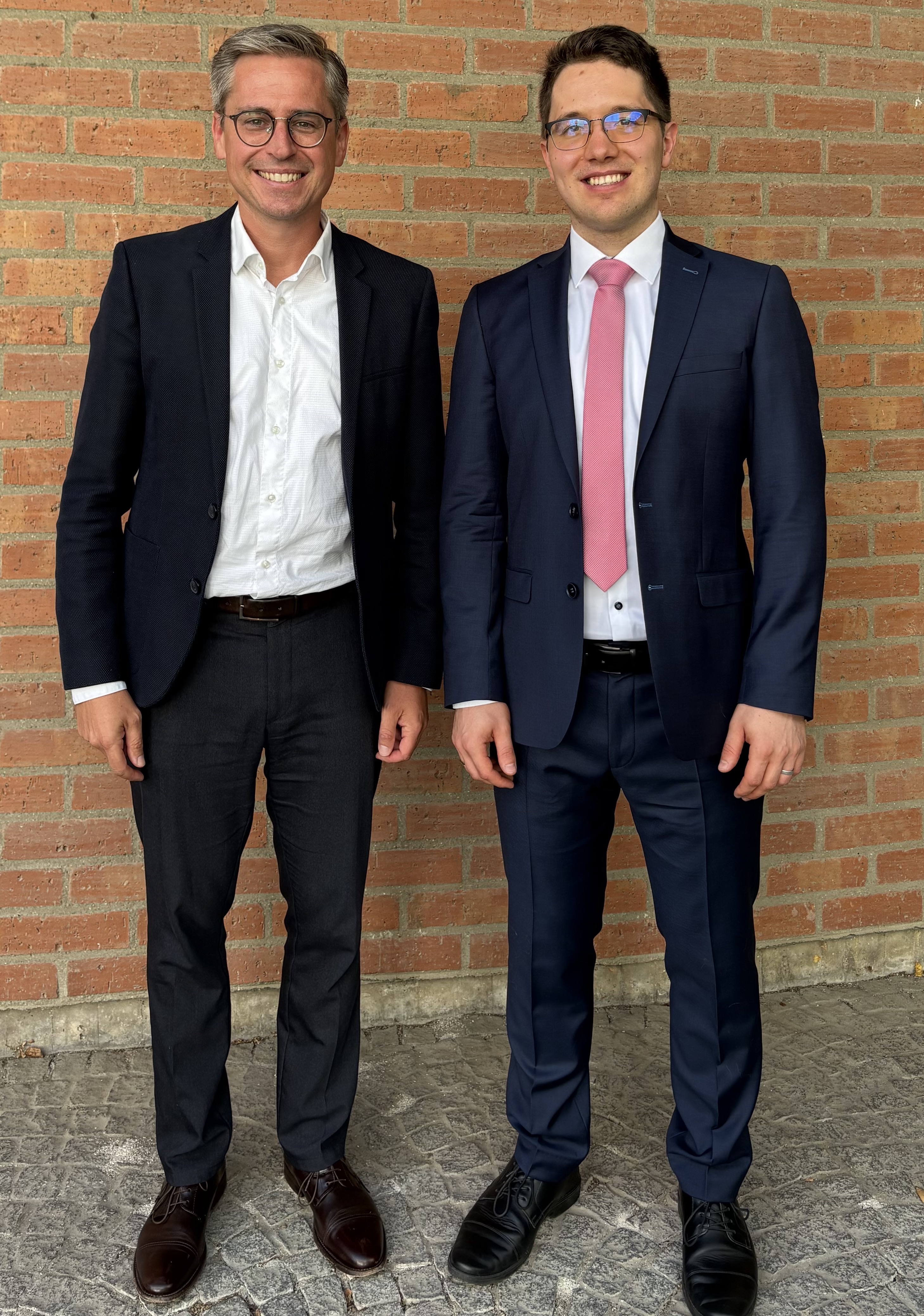
04.09.2026: Martin successfully defended his dissertation and is now Dr. Schwade, many congratulations!
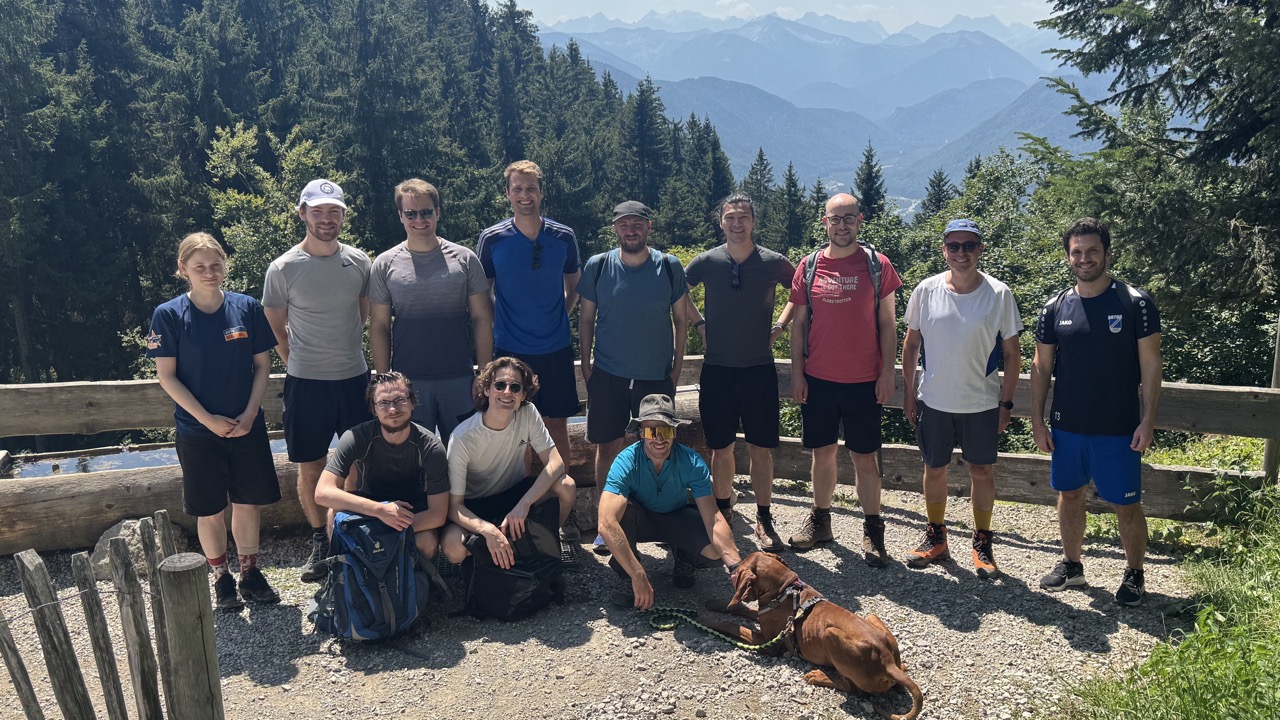
31.07.2026: Our team held its annual hiking event walking up to Lenggrieser Hütte.
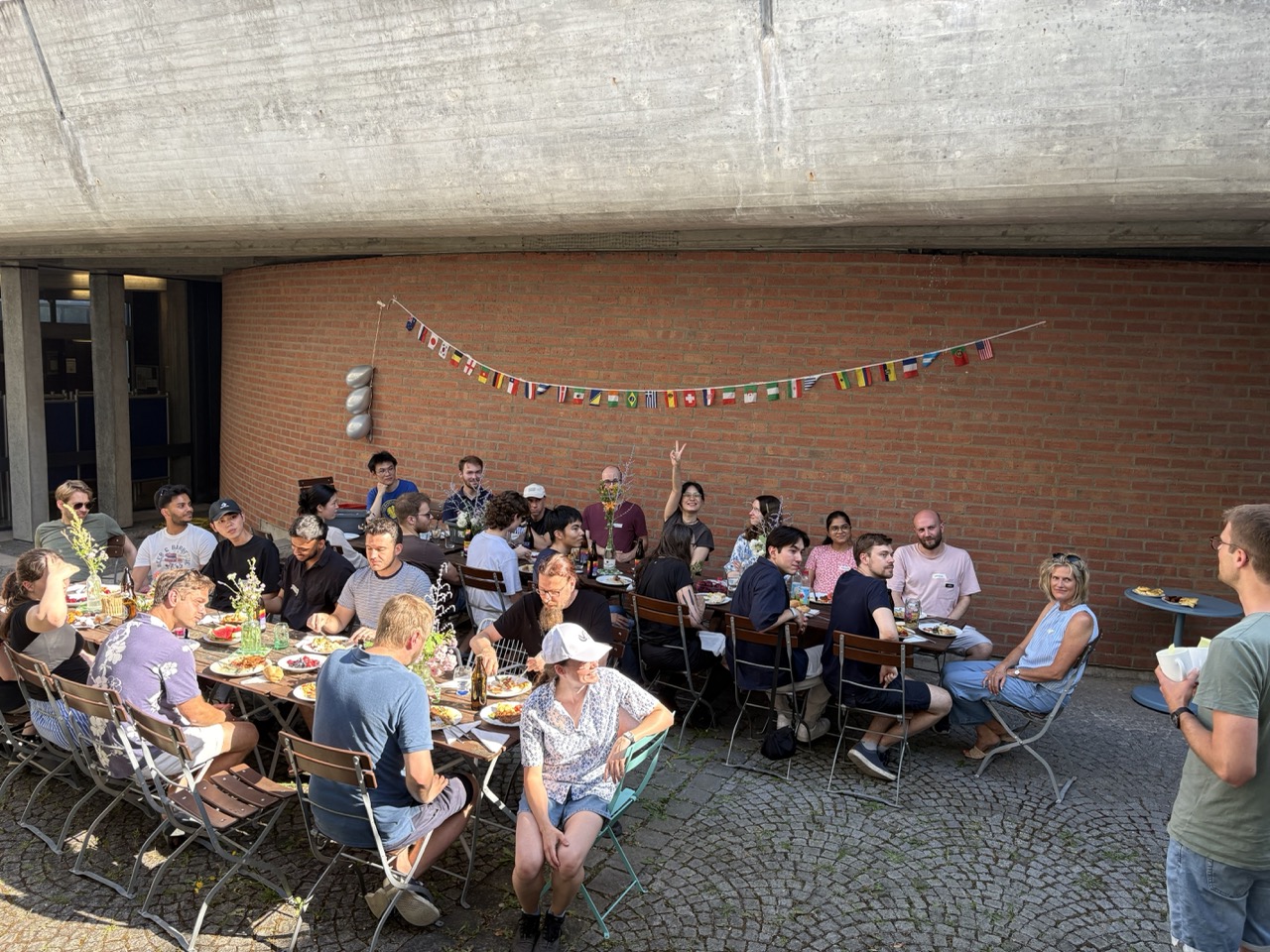
25.06.2026: We’ve had a lovely summer BBQ together with the group of Patrick Rinke.
11.05.2026: Xiangzhou’s paper suggests to leverage equivariant neural networks for predicting optoelectronic properties of defective semiconductors at finite temperatures.
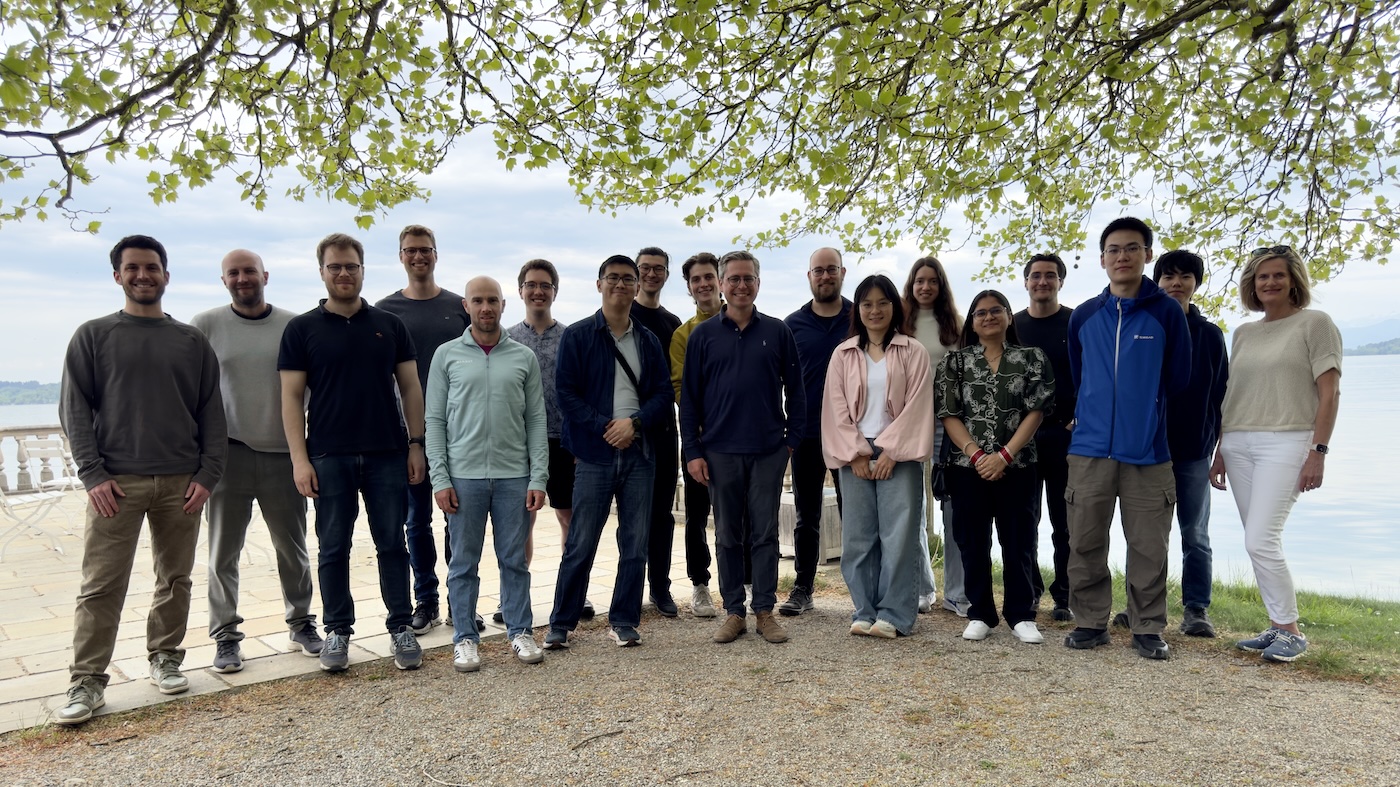
06.05.2026: Our group had a lovely retreat in Tutzing next to Lake Starnberg.
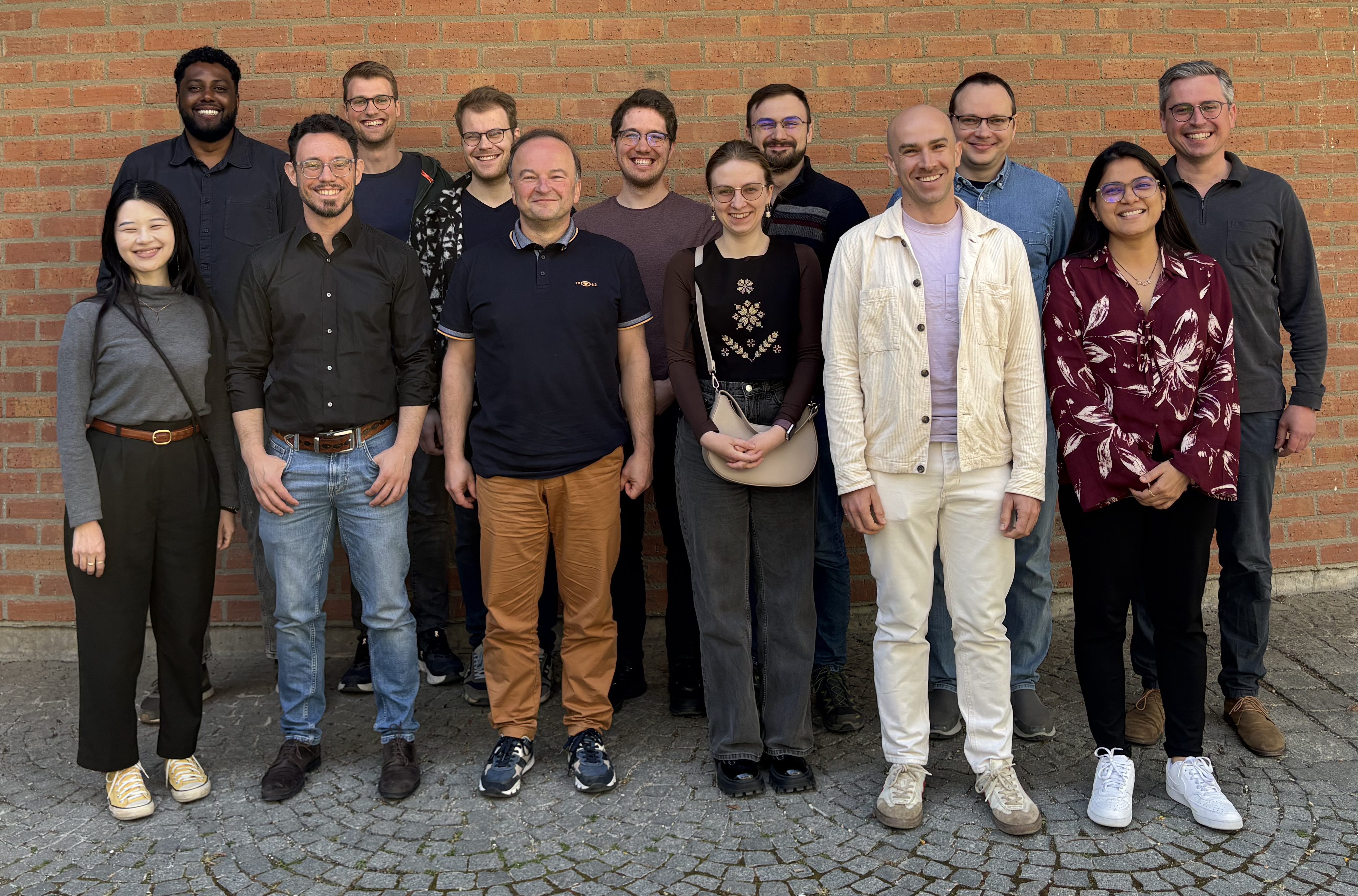
24.04.2026: We held our first workshop of the CLARINET consortium with collaborators from Luxembourg and Mons at TUM – here is our group photo.
20.03.2026: We developed physics-informed Hamiltonian learning with a model that we call HAMSTER: see Martin’s paper in Nature Communications and NAT school news item.
15.03.2026: Manjari Jain and Tomer Amit join our group as post-doctoral fellows, welcome to the team!
03.02.2026: We propose machine-learning for Raman spectroscopy to discover highly conductive battery materials in Manuel’s study published in AI for Science, see also NAT school news item.